Cell & Developmental Pathology
Fundamental studies in the area of cell and developmental pathology focus on the development, morphogenesis and function of epithelial, hematopoietic and neuronal cell lineages as well as cells of the immune system.
Learn more about our work below.
Kathleen Green Lab Cell-to-cell adhesion molecules' integration of mechanical and signaling functions in skin and heart differentiation, disease and cancer.
Cell-to-cell adhesion molecules' integration of mechanical and signaling functions in skin and heart differentiation, disease and cancer.
Research Description
The Green Lab's research program focuses on how cell-cell adhesion molecules and their associated proteins integrate mechanical and chemical signaling pathways to contribute to the development and maintenance of multicellular tissues. In particular, the lab investigates how specialized intercellular junctions called desmosomes assemble and function in ways that transcend their classic textbook definition as spot welds. The lab has shown that desmosomal cadherins help control the balance of proliferation and differentiation and even regulate the production of cytokines that participate in paracrine signaling. Loss of this "brake" results in increased allergic and inflammatory pathways that underlie pathogenesis in inherited disease and possibly cancer, including melanoma. Desmosomes also integrate the functions of other intercellular junctions, including gap junctions, and interfering mutations can cause lethal heart arrhythmias.
The lab uses a multifaceted approach, including but not limited to collaborative atomic structure determinations, molecular genetics, live-cell imaging, human tissue engineering and gene-targeting approaches.
For more information, please visit the faculty profile of Kathleen Green, PhD, and the Green Lab website.
Publications
See Green's publications in PubMed.
Contact
Rui Yi Lab Investigate mechanisms of skin development, stem cells, aging and cancer at the single-cell level.
Investigate mechanisms of skin development, stem cells, aging and cancer at the single-cell level.
Research Description
Mammalian skin and its appendages function as the outermost barrier of the body to protect inner organs from environmental hazards and keep essential fluid within. Our research program studies mechanisms that govern cell fate specification, stem cell maintenance and aging, as well as initiation and progression of cancer. We use single-cell genomics and computational tools, live animal imaging and genetically engineered mouse models to study gene expression regulation mediated by transcription factors, epigenetic regulators and post-transcriptional mechanisms mediated by miRNAs and RNA-binding proteins at single-cell resolution in mammalian skin.
Our research aims to address several fundamental questions in stem cell biology: how the developmental potential of embryonic progenitors and adult tissue stem cells is transmitted or restricted in their progenies at the molecular level when they go through critical transitions such as cell fate specification, self-renewal of stem cells as well as stress response, and how these regulatory mechanisms go awry in aging and diseases. Answers to these questions will help to manipulate skin stem cells for regenerative medicine and discover new treatments for human skin diseases.
See Yi's publications via PubMed.
For more information, visit the faculty profile of Rui Yi, PhD, or visit the Yi Lab website.
Contact Us
Yashpal Kanwar Lab Pathology of diabetic nephropathy with an emphasis on tubulopathy.
Pathology of diabetic nephropathy with an emphasis on tubulopathy.
The Kanwar Lab studies how the association of cells with the extracellular matrix-rich environment guides the morphogenesis of tissues and contributes to repair after injury, leading to the development of fibrosis in the kidneys in response to aging, gene mutations and changes in metabolism.
Our lab is interested in how cytoskeletal signaling, motor proteins and adhesion systems are integrated with chemical signaling pathways to regulate cell behavior, tissue differentiation and disease. Specifically, we are interested in the role of small G proteins and their regulatory GEFS and GAPs in kidney, skin and cardiac development and disease including diabetic nephropathy.
For more information, please visit the faculty profile of Yashpal Kanwar, MD, PhD.
Peng Ji Lab Role of MDia1 in the pathogenesis of del(5q) myelodysplastic syndromes.
Role of MDia1 in the pathogenesis of del(5q) myelodysplastic syndromes.
Research Interests
The Ji Lab is interested in how cytoskeletal signaling, motor proteins and adhesion systems integrate with chemical signaling pathways to regulate cell behavior, tissue differentiation and disease. Our lab studies small G proteins and downstream actin regulatory effectors that participate in enucleation during red cell development.
At the nuclear level, the Ji lab studies genes involved in erythroid lineage commitment, chromatin condensation and enucleation to understand how congenital red cell disorders and leukemia develop.
For more information, visit the faculty profile of Peng Ji, MD, PhD.
Publications
See Ji's publications in PubMed.
Contact
Contact Us


Rui Yi
Professor, Pathology (Experimental Pathology), Dermatology
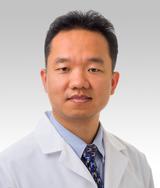

Yashpal S Kanwar
Professor, Pathology (Experimental Pathology), Medicine (Nephrology and Hypertension), Pathology (Renal Pathology)