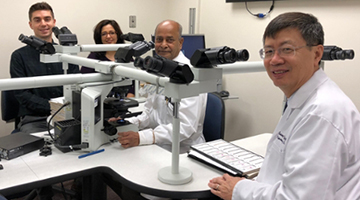
 The Department of Pathology faculty who specialize in surgical pathology focus on education, research and clinical services through our affiliates, providing definitive diagnoses for any case in which tissue is surgically removed from a living patient.
Two main types of surgical pathology specimens include:
- Biopsies: small pieces of tissue and characterized as core biopsies (obtained through a large-bore needle under ultrasound or imaging guidance)
- Incisional biopsies: removal of a small part of the suspicious lesion
- Excisional biopsies: removal of the entire suspicious lesion
- Surgical resection: specimens are obtained by the surgical removal of the entire diseased organ or region (may include several organs)
The practice of surgical pathology usually combines gross (visual or macroscopic) and microscopic examination of tissue and may also involve cutting-edge techniques or state-of-the-art molecular and genetic laboratory tests to evaluate tissue and disease properties. Surgical pathology analysis of these biopsy and surgical resection specimens is the gold standard to confirm a diagnosis and stage the extent of malignant disease.
Another major function of the surgical pathology specialty is to perform rapid intraoperative consultations (frozen sections) to help surgeons chart the proper course during surgical procedures. Examining fresh "frozen section" specimens helps to provide a rapid microscopic analysis of the specimen, to establish whether the entire area of disease has been successfully removed during surgery (examining the margins of the frozen section) and to guide the progression of the surgical procedure.
Education
We provide training opportunities for pathology residents in histopathologic diagnosis and staging of various diseases or systemic surgical pathology. Post-residency fellowships in surgical/gastrointestinal pathology, breast pathology and genitourinary/renal pathology are available to offer more extensive training in each subspecialty pathology. We also have opportunities for medical students who wish to pursue educational experiences in pathology.
Research
Faculty in this specialty conduct a wide spectrum of research, mainly focusing on translational research and clinical research.
Patient Care
Our surgical pathology faculty reflects the various subspecialties of our highly qualified, board-certified pathologists. Subspecialization increases experience and skill in interpreting challenging cases.
Areas of extensive experience and subspecialization include:
- Breast pathology
- Cardiac pathology
- Gastrointestinal/hepatic pathology
- Genitourinary/renal pathology
- Gynecologic/reproductive pathology
- Perinatal pathology
- Thoracic/soft tissue/endocrine pathology
Contact Us
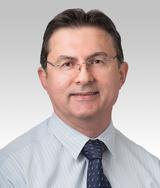
Borislav A Alexiev
Professor, Pathology (Soft Tissue Pathology), Pathology (Head and Neck Pathology)

Anjana Yeldandi
Associate Professor, Pathology (Thoracic Pathology)
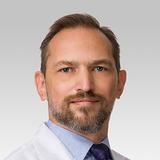
Bogdan V Isaila
Assistant Professor, Pathology (Genitourinary Pathology), Pathology (Soft Tissue Pathology)